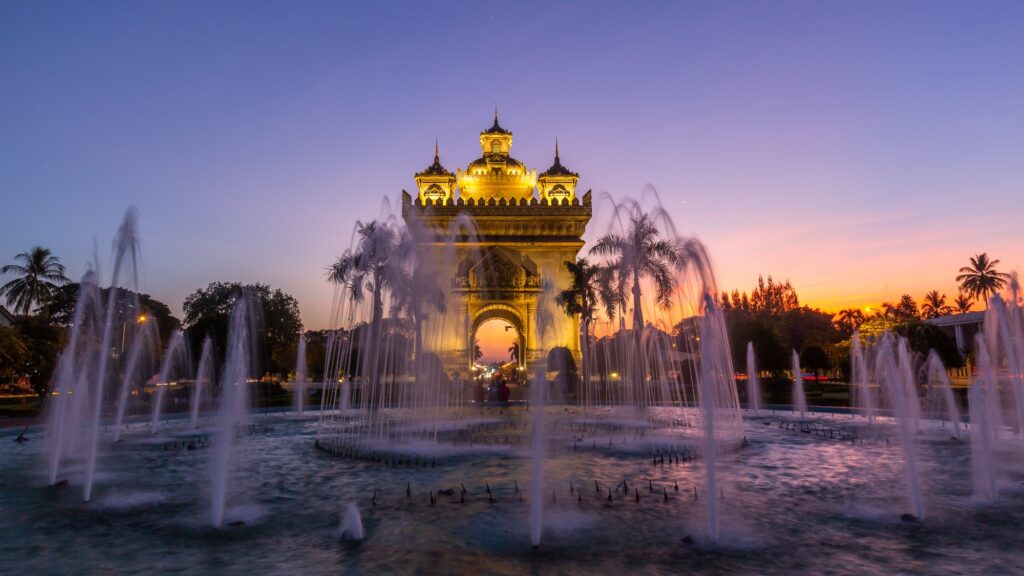
Patuxay Park, an iconic landmark in Vientiane, Laos, stands as a testament to the country’s rich history, resilience, and cultural identity. Often referred to as the “Victory Gate” or “Gate of Triumph,” Patuxay is a monumental archway that holds both historical and symbolic significance for the Laotian people. Surrounded by a lush park, this grand structure is a focal point for locals and visitors alike, inviting them to explore its architectural splendor and delve into the stories that echo through its corridors.
The construction of Patuxay began in the 1950s, a period marked by the struggle for independence from French colonial rule. Originally conceived as a monument to honor those who fought for Laos’ independence from foreign powers, Patuxay evolved into a symbol of national pride and a commemoration of the Laotian spirit. The monument’s name, Patuxay, translates to “Victory Gate” or “Gate of Triumph,” underscoring its significance in the narrative of Laos’ journey to sovereignty.
As visitors approach Patuxay Park, the grandeur of the arch comes into view. The monument, with its distinct Laotian architectural style, draws inspiration from the Arc de Triomphe in Paris but incorporates cultural elements that make it uniquely Lao. The five towers of the arch represent the five principles of coexistence outlined in the country’s constitution – democracy, unity, prosperity, peace, and equality.
Ascending the monument reveals a series of staircases and corridors, each adorned with intricate sculptures and mosaics that depict scenes from Laotian folklore, mythology, and history. The climb to the top offers not only a panoramic view of Vientiane but also a visual journey through the cultural tapestry of Laos. The ornate details showcase the craftsmanship of Laotian artisans, adding a layer of cultural richness to the architectural marvel.
The top of Patuxay provides an expansive view of Vientiane, with the Mekong River gracefully meandering through the landscape and the city stretching out in all directions. The sight of the city from this vantage point is particularly captivating during sunset when the warm hues of the fading sun cast a golden glow over the capital. Many visitors choose this time to ascend the monument, adding a touch of magic to their experience.
Surrounding Patuxay is a meticulously landscaped park, creating a peaceful oasis amidst the urban bustle. The park is adorned with fountains, sculptures, and walking paths, providing a serene environment for both leisurely strolls and contemplation. Locals often gather in the park for picnics or to engage in traditional activities, creating a harmonious blend of recreation and cultural connection.
Patuxay Park is not merely a static monument but a vibrant space that hosts various cultural events, festivals, and gatherings throughout the year. The park comes alive during celebrations such as Lao New Year (Pi Mai Lao) and other national festivities, becoming a focal point for communal activities and expressions of national pride. These events offer visitors a chance to witness the dynamic energy and joy that characterize Laotian celebrations.
The monument also serves as a reminder of the challenges faced by Laos during its quest for independence. The structure incorporates elements of traditional Laotian beliefs, infusing spirituality into its symbolism. Patuxay is not just a physical structure; it is a living testament to the resilience and determination of the Laotian people in their pursuit of freedom and self-determination.
Adjacent to Patuxay Park is the Patuxay War Memorial, further emphasizing the historical context of the monument. The memorial honors those who sacrificed their lives during various wars, including the struggle for independence. Visitors can pay their respects at the memorial, deepening their understanding of the complex history that has shaped Laos into the nation it is today.
In addition to its historical and cultural significance, Patuxay Park is a haven for those seeking a moment of tranquility and connection with nature. The well-manicured gardens, shaded walkways, and open spaces provide an ideal setting for relaxation. The park is a popular destination for locals and tourists alike, offering a respite from the urban hustle and an opportunity to appreciate the beauty of the surroundings.
In conclusion, Patuxay Park and its monumental arch serve as a symbolic gateway to Laos’ history, culture, and aspirations. It stands not only as a testament to the nation’s past struggles and triumphs but also as a vibrant space that connects the people of Laos to their heritage. A visit to Patuxay Park is a journey through time and a celebration of the resilience and spirit that define this remarkable Southeast Asian nation.