A Masterpiece of Sri Lankan Buddhist Art and Architecture
Introduction
Polonnaruwa, a UNESCO World Heritage Site located in the North Central Province of Sri Lanka, is a city steeped in history and cultural significance. Among its many treasures, the Polonnaruwa Gal Viharaya stands as a testament to the rich artistic and religious heritage of the region. Also known as the Gal Vihara or the Uttararama, this rock temple complex is celebrated for its exceptional stone carvings, which showcase the pinnacle of Sri Lankan Buddhist artistry. In this comprehensive exploration, we delve into the history, significance, architectural brilliance, and the spiritual essence of the Polonnaruwa Gal Viharaya.
Historical Background
The Polonnaruwa Gal Viharaya was constructed during the reign of King Parakramabahu I (1153-1186 AD), a period often referred to as the “Golden Age” of Sri Lankan history. King Parakramabahu I was not only a powerful ruler but also a devout Buddhist who played a pivotal role in the revival and promotion of Buddhism in the region. It was under his patronage that this magnificent rock temple complex came into existence.
Architectural Marvels
The Gal Viharaya is renowned for its exceptional stone carvings, which are considered some of the finest examples of Buddhist sculpture in Sri Lanka. The complex primarily comprises four main components:
Standing Buddha Statue: The centerpiece of the Gal Viharaya is a colossal standing Buddha statue carved from a single granite rock face. This 7-meter-tall statue, known as the Samadhi Buddha, depicts Lord Buddha in a meditative pose. The precision and attention to detail in this sculpture are awe-inspiring, reflecting the skill of the ancient craftsmen.
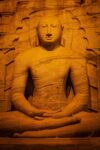
Sitting Buddha Statue: Adjacent to the standing Buddha is a seated Buddha statue, also carved from a single granite rock. This statue, often referred to as the Dhyana Buddha, portrays Lord Buddha in deep meditation. The serene expression and graceful posture of the Buddha convey a sense of profound tranquility.
Reclining Buddha Statue: In another chamber of the rock temple, there is a reclining Buddha statue, representing Lord Buddha in his final moments before entering parinirvana (nirvana after death). The statue is approximately 14 meters in length and is a striking portrayal of the Buddha’s peaceful departure from this world.
Incomplete Statue: In addition to the three main statues, there is an unfinished statue of Lord Buddha, which provides insight into the process of sculpting these magnificent figures. This unfinished statue showcases the initial rough carving before the intricate details were added.
Spiritual Significance
The Gal Viharaya is not only a masterpiece of art and architecture but also a place of deep spiritual significance for Buddhists in Sri Lanka and around the world. It serves as a place of worship and meditation, where devotees come to pay their respects and find solace in the serene presence of the Buddha. The statues, with their serene and compassionate expressions, inspire a sense of inner peace and contemplation among visitors.
Conservation and Preservation
Preserving the Gal Viharaya’s historical and artistic value is of paramount importance. Over the years, various conservation efforts have been undertaken to protect these ancient sculptures from environmental and human factors. Conservationists and archaeologists have worked tirelessly to maintain the integrity of these precious relics.
Visiting the Polonnaruwa Gal Viharaya
Visiting the Polonnaruwa Gal Viharaya is a journey back in time, allowing visitors to connect with the rich cultural and religious heritage of Sri Lanka. The site is open to tourists and pilgrims, and it’s advisable to explore the complex with a knowledgeable guide who can provide insights into the history and significance of these magnificent sculptures.
In conclusion, the Polonnaruwa Gal Viharaya stands as a shining example of Sri Lankan Buddhist art and spirituality. Its remarkable statues, carved with precision and devotion, continue to inspire awe and reverence among all who have the privilege of visiting this sacred site. This enduring masterpiece is a testament to the enduring legacy of Buddhism in Sri Lanka and a symbol of the country’s rich cultural heritage.