Perched on the eastern hills of Kyoto, Japan, Kiyomizu-dera, or the “Pure Water Temple,” stands as a testament to the enduring beauty of Japanese architecture, religious significance, and natural landscapes. With a history dating back over a millennium, this UNESCO World Heritage site has captivated visitors with its wooden terrace that offers panoramic views of Kyoto, lush seasonal surroundings, and a sense of spiritual tranquility. Join us on a virtual exploration of Kiyomizu-dera, unraveling its historical roots, architectural wonders, and the cultural tapestry that has made it a cherished symbol of Kyoto.
Historical Roots: Kiyomizu-dera’s origins trace back to the early days of Kyoto in the 8th century. The temple was initially established in 778, but the current structure dates to 1633, reconstructed during the Edo period. The temple is associated with the Hosso sect of Buddhism, and its name, “Kiyomizu,” refers to the pure water that flows from the Otowa Waterfall on the temple grounds.
Otowa Waterfall: A highlight of Kiyomizu-dera is the Otowa Waterfall, where visitors have the unique opportunity to drink from three streams, each believed to grant a different blessing – longevity, success in academics, and a fortunate love life. The ritual of drinking from these streams reflects the spiritual and cultural practices deeply embedded in the temple’s legacy.
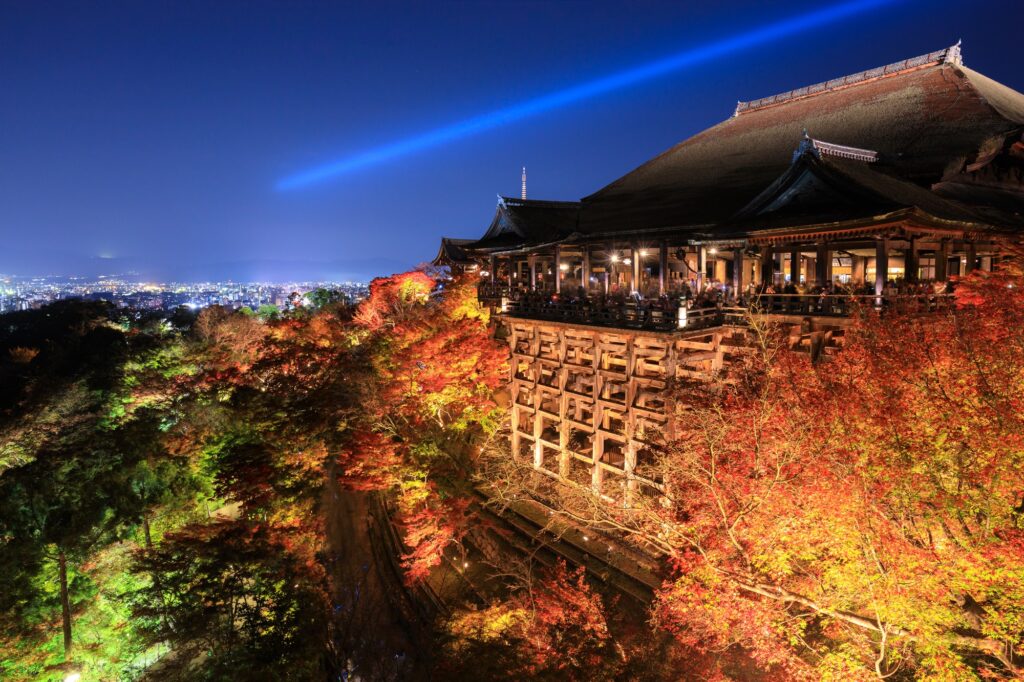
Wooden Terrace – Kiyomizu Stage: The most iconic feature of Kiyomizu-dera is its wooden terrace, known as the Kiyomizu Stage, which juts out from the main hall. Built without the use of nails, the stage offers breathtaking views of Kyoto and the surrounding hills. The panoramic vista changes with the seasons, featuring cherry blossoms in spring, lush greenery in summer, vibrant foliage in autumn, and a serene snowscape in winter.
Architectural Marvels: Kiyomizu-dera’s main hall, or Hondo, is a masterpiece of Japanese architecture. Supported by wooden pillars and beams, the hall exemplifies the craftsmanship of the Edo period. The intricate details, including the use of vermillion accents and traditional roof tiles, showcase the elegance and precision of Japanese design. The architectural style, known as “Kiyomizu-zukuri,” has become synonymous with the temple.
Jishu Shrine – The God of Love: Within the temple complex lies Jishu Shrine, dedicated to Okuninushi, the Shinto god of love and matchmaking. Pilgrims and visitors often visit this shrine to seek blessings for romantic endeavors. The “Love Stones” in front of the shrine present a unique challenge successfully walking from one stone to another with closed eyes is believed to lead to finding true love.
Seasonal Beauty: Kiyomizu-dera’s allure transforms with the changing seasons, creating a captivating spectacle throughout the year. Cherry blossoms blanket the temple grounds in spring, attracting crowds for hanami (flower viewing) picnics. In summer, the surrounding greenery flourishes, creating a lush backdrop. Autumn adorns the landscape with a vibrant tapestry of red and gold foliage, while winter’s tranquility blankets the temple in snow.
Cultural Festivals: Kiyomizu-dera hosts several cultural festivals, adding vibrancy to its spiritual ambiance. The most notable is the Kiyomizu-dera Matsuri, held in March, featuring traditional performances, processions, and rituals. These festivals offer visitors a deeper understanding of the temple’s cultural heritage and religious traditions.
Night Illuminations: The enchantment of Kiyomizu-dera extends into the evening during special night illuminations. The illuminated temple against the backdrop of Kyoto’s city lights creates a magical atmosphere. These events, often held during the cherry blossom and autumn foliage seasons, draw visitors seeking a different perspective of the temple’s beauty.
Cultural Significance: Kiyomizu-dera’s cultural significance is deeply rooted in its connection to Buddhism and Shintoism. The temple’s association with Otowa Waterfall, love and matchmaking at Jishu Shrine, and its role in seasonal celebrations contribute to its multifaceted cultural identity. Pilgrims and tourists alike are drawn to Kiyomizu-dera not only for its architectural splendor but also for the spiritual experiences it offers.
Access and Pilgrimage: The temple is easily accessible from central Kyoto, and its location amid the Higashiyama district allows visitors to explore the surrounding historic streets and neighborhoods. Many pilgrims embark on the Kiyomizu-dera Kaidan Meguri, a sub-temple pilgrimage where participants traverse complete darkness in a pitch-black underground tunnel to reach the main hall.
Preservation Efforts: Preserving the cultural and structural integrity of Kiyomizu-dera is a continual effort. The periodic renovation of the wooden terrace, a tradition known as “Kiyomizu no Butai no Nagashi,” involves the meticulous replacement of the entire structure every few decades. This centuries-old practice ensures the longevity of the temple while adhering to traditional construction techniques.
Conclusion: Kiyomizu-dera stands as a symbol of Kyoto’s rich cultural heritage, offering a harmonious blend of spirituality, architecture, and natural beauty. The wooden terrace, seasonal transformations, and cultural rituals contribute to the enduring allure that has captivated generations. Whether gazing upon Kyoto from the Kiyomizu Stage, participating in rituals, or strolling through the temple’s picturesque surroundings, visitors are immersed in an experience that transcends time, inviting them to connect with the essence of Japan’s cultural and religious traditions.