

Nestled on the shores of Saadiyat Island in the capital city of the United Arab Emirates, the Louvre Abu Dhabi stands as a cultural beacon that transcends boundaries, bridging civilizations, and celebrating the rich tapestry of human history. This architectural marvel, an emblem of the evolving art scene in the Middle East, brings together masterpieces from diverse cultures, offering visitors an immersive journey through the ages and a unique perspective on the interconnectedness of global heritage.
Architectural Splendor: A Modern Marvel
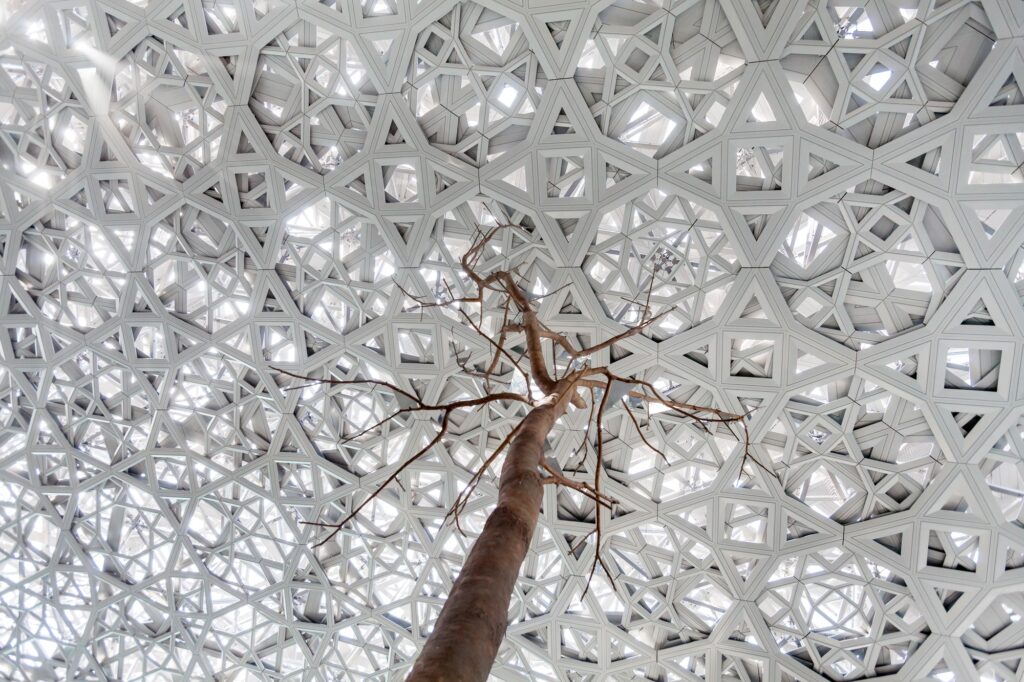
The Louvre Abu Dhabi, designed by Pritzker Prize-winning architect Jean Nouvel, is a marvel of contemporary architecture that seamlessly blends tradition and innovation. The museum’s iconic dome, a lattice of geometric patterns, appears to float above the structure, creating a mesmerizing play of light and shadow. Inspired by traditional Arabic architecture, the dome evokes the image of overlapping palm leaves, casting a “rain of light” that filters through its intricately designed openings.
The exterior of the museum is surrounded by reflective pools, connecting the building to the waters that embrace Saadiyat Island. The combination of modern design and traditional influences creates a unique visual experience that sets the stage for the cultural treasures housed within.
Universal Museography: A Global Perspective
The Louvre Abu Dhabi adopts a universal museography that redefines conventional categorizations of art, presenting a chronological and thematic arrangement that transcends cultural and geographical boundaries. Instead of dividing art into Western and non-Western classifications, the museum organizes its collections based on shared human experiences and themes, encouraging visitors to explore the connections between different civilizations.
The galleries are curated to reflect overarching themes such as “The First Villages” and “The World in Perspective,” creating a narrative that spans prehistoric artifacts to contemporary masterpieces. This approach fosters a deeper understanding of the commonalities in human creativity and expression throughout history.
Masterpieces from Around the World: A Global Collection
At the heart of the Louvre Abu Dhabi is its unparalleled collection of artworks sourced from renowned institutions around the world. The museum’s acquisition strategy includes both permanent and temporary loans, allowing for a dynamic and ever-evolving display of cultural treasures.
Visitors can marvel at masterpieces from diverse cultures and periods, including ancient Egyptian artifacts, classical sculptures, Islamic manuscripts, European paintings, and contemporary installations. Iconic works, such as Leonardo da Vinci’s “La Belle Ferronnière” and Vincent van Gogh’s self-portrait, find a home within the museum’s walls, creating a kaleidoscope of artistic expression.
Islamic Art: A Focal Point
Given its location in the heart of the Islamic world, the Louvre Abu Dhabi places a special emphasis on Islamic art and heritage. The museum’s galleries dedicated to Islamic art showcase a rich tapestry of objects, manuscripts, and architectural elements from various Islamic civilizations. Visitors can explore the evolution of Islamic artistic traditions, from Spain to South Asia, gaining insights into the diverse cultural influences that have shaped this dynamic and expansive heritage.
The display includes intricate calligraphy, illuminated manuscripts, textiles, ceramics, and architectural elements, providing a comprehensive overview of the artistic achievements of Islamic civilizations throughout the centuries.
Temporary Exhibitions: Dynamic Cultural Dialogues
In addition to its permanent collection, the Louvre Abu Dhabi hosts a series of temporary exhibitions that further enrich the cultural dialogue. These exhibitions cover a wide range of themes, from contemporary art to specific historical periods, bringing fresh perspectives and fostering a continuous exchange of ideas.
International collaborations and partnerships with renowned institutions contribute to the museum’s dynamic programming, ensuring that visitors can encounter a diverse array of artistic expressions and cultural narratives.
Educational Initiatives: Nurturing Curiosity
The Louvre Abu Dhabi is committed to nurturing curiosity and fostering a love for art and culture among visitors of all ages. The museum offers educational programs, workshops, and guided tours designed to engage both adults and children in meaningful ways. Through interactive experiences and hands-on activities, visitors can deepen their understanding of art and history, forging a connection with the cultural heritage on display.
Cultural District of Saadiyat Island: A Hub of Creativity
The Louvre Abu Dhabi is part of the Saadiyat Cultural District, a visionary project that aims to transform the island into a global center for arts and culture. The district is set to host several world-class cultural institutions, including the Guggenheim Abu Dhabi and the Zayed National Museum, creating a vibrant ecosystem that fosters creativity, innovation, and cross-cultural dialogue.
The establishment of the Louvre Abu Dhabi represents a pivotal moment in the development of the cultural district, positioning the UAE as a hub for artistic exchange and collaboration on the global stage.
Cultural Diplomacy: A Symbol of Collaboration
The Louvre Abu Dhabi serves as a symbol of international collaboration and cultural diplomacy. The establishment of the museum is the result of a groundbreaking agreement between the governments of Abu Dhabi and France, exemplifying the power of cultural institutions to foster mutual understanding and dialogue between nations.
The collaboration extends beyond the exchange of artworks to include educational programs, research initiatives, and cultural exchanges, strengthening the ties between the UAE and France and contributing to a global discourse on the importance of cultural heritage.
Sustainability and Innovation: A Responsible Approach
In its commitment to sustainable practices, the Louvre Abu Dhabi incorporates innovative technologies and design elements to reduce its environmental impact. The museum’s architecture incorporates shading systems to optimize natural light, and its dome is designed to capture and distribute rainwater. These initiatives reflect a commitment to environmental responsibility and a harmonious integration with the natural surroundings of Saadiyat Island.
Visitor Experience: A Cultural Journey
The Louvre Abu Dhabi offers visitors a cultural journey that extends beyond the appreciation of individual artworks. The architectural marvel, thought-provoking exhibitions, and immersive educational programs contribute to a holistic experience that encourages contemplation and dialogue. The museum’s location on the waterfront provides a serene backdrop, inviting visitors to explore art in a tranquil and contemplative setting.
Conclusion
The Louvre Abu Dhabi stands as a testament to the transformative power of art and culture, transcending geographical boundaries and fostering a shared understanding of humanity’s collective heritage. In the embrace of its iconic dome, visitors embark on a journey through time, connecting with masterpieces from diverse civilizations and gaining insights into the universal language of creativity.
As a cultural beacon in the Middle East, the Louvre Abu Dhabi not only showcases the brilliance of human artistic expression but also serves as a catalyst for cultural exchange, collaboration, and the celebration of our shared humanity. Through its commitment to education, sustainability, and innovative museography, the museum contributes to a legacy that extends far beyond its architectural splendor, leaving an indelible mark on the global cultural landscape.