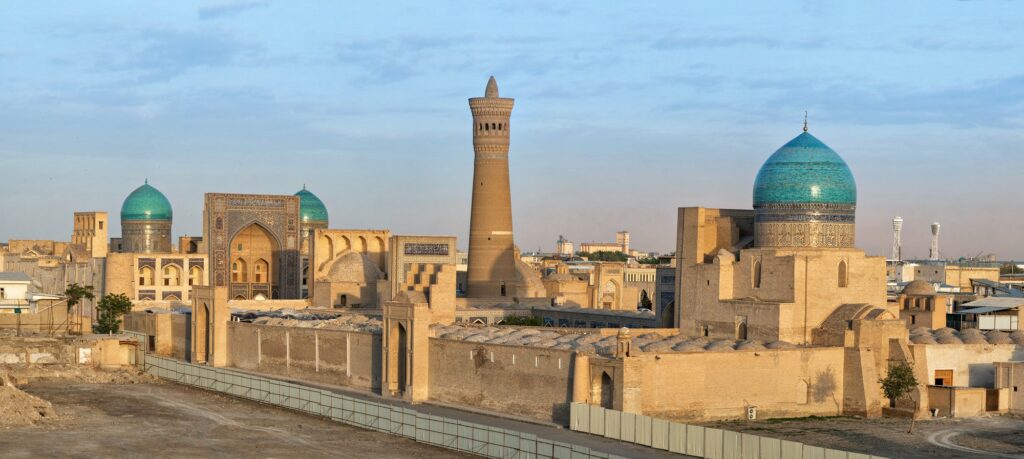
Bukhara, a city steeped in history and cultural heritage, stands as one of the jewels of Uzbekistan and Central Asia. Nestled along the ancient Silk Road, Bukhara has been a crossroads of civilizations, a center of learning, and a hub of trade for over two millennia. This essay aims to delve into the geographical, historical, and cultural dimensions of Bukhara, providing a glimpse into the city’s enduring legacy.
Geographical Setting: Bukhara is located in the western part of Uzbekistan, situated on the Silk Road amidst the vast Kyzylkum Desert. The city’s strategic position along trade routes facilitated the exchange of goods, ideas, and cultures, contributing to its historical significance.
Ancient History: The history of Bukhara dates back to ancient times, with evidence of human settlement in the region as far back as the 6th century BCE. The city flourished as part of the Persian Empire, and its strategic location made it a key center for commerce and cultural exchange.
Islamic Golden Age: Bukhara reached its zenith during the Islamic Golden Age, particularly under the Samanid Empire in the 9th and 10th centuries. The city became a center of learning, attracting scholars, poets, and scientists from across the Islamic world. Bukhara’s intellectual achievements during this period left an indelible mark on Islamic scholarship and culture.
Architectural Heritage: The architectural heritage of Bukhara is a testament to its rich history. The city boasts numerous mosques, madrasas, and minarets that showcase the exquisite craftsmanship and artistic achievements of different eras. The Kalyan Mosque and the Po-i-Kalyan Complex, featuring the Kalyan Minaret, are iconic symbols of Bukhara’s architectural splendor.
The Ark of Bukhara, a massive fortress and royal residence, reflects the city’s historical role as a political and administrative center. The Samanid Mausoleum, considered one of the oldest surviving monuments of Islamic architecture in Central Asia, is another jewel in Bukhara’s crown.
Silk Road Trade: Bukhara thrived as a vibrant center of trade along the Silk Road, connecting the East and West. The city’s bustling bazaars were filled with merchants trading in silk, spices, precious metals, and other commodities. The trade routes passing through Bukhara not only fueled economic prosperity but also facilitated the exchange of ideas and cultures.
Timurid Renaissance: The Timurid era marked another period of cultural and artistic flourishing in Bukhara. Under the rule of Timur (Tamerlane) and his descendants, the city experienced a renaissance in literature, art, and architecture. The Ulugh Beg Madrasa and the Abdulaziz Khan Madrasa are notable structures from this era, representing the Timurid commitment to intellectual and artistic pursuits.
Russian Influence and Soviet Era: In the late 19th century, Bukhara came under Russian influence, eventually becoming part of the Soviet Union. The city underwent changes in governance, urban planning, and societal structures during the Soviet era. However, efforts were made to preserve its historical monuments, and Bukhara was recognized for its cultural significance.
Independence and Cultural Preservation: With the independence of Uzbekistan in 1991, Bukhara entered a new chapter in its history. The government, along with international organizations, has been dedicated to preserving and restoring the city’s cultural heritage. Conservation projects have focused on maintaining the authenticity of Bukhara’s historical sites while promoting sustainable tourism.
Cultural Traditions: Bukhara’s cultural traditions are deeply rooted in its history and the diverse influences that have shaped the city. The traditional music, dance, and crafts of Bukhara are celebrated in cultural events and festivals, providing a glimpse into the vibrant tapestry of the city’s heritage.
Contemporary Bukhara: In the contemporary era, Bukhara remains a living museum of Central Asian history and culture. While preserving its ancient sites, the city has also embraced modernity with infrastructure developments, tourism initiatives, and cultural exchanges. Visitors to Bukhara can experience a harmonious blend of the old and the new, with the city’s historical charm complemented by the amenities of the present.
Conclusion: In conclusion, Bukhara stands as a testament to the enduring spirit of Central Asia. Its ancient streets, magnificent monuments, and rich cultural tapestry tell the story of a city that has witnessed the ebb and flow of empires, the exchange of ideas, and the resilience of its people. As Bukhara continues to embrace its historical legacy and welcome visitors from around the world, it remains a timeless jewel in the crown of Uzbekistan’s cultural heritage.