Man Mo Temple

Man Mo Temple

Average Reviews

Description

A Sanctuary of Tradition and Tranquility in Hong Kong

Nestled amidst the bustling streets of Hong Kong, the Man Mo Temple stands as a timeless testament to the city’s rich cultural heritage and religious traditions. This iconic Taoist temple, dedicated to the deities Man Cheong and Mo Tai, draws visitors into a world of incense-laden halls, intricate wooden carvings, and a profound sense of spirituality. As one of Hong Kong’s oldest and most revered temples, the Man Mo Temple offers a captivating journey through time, inviting both locals and tourists to explore its sacred halls and appreciate the artistry and devotion that define this cultural gem.

A Glimpse into History

The Man Mo Temple, located in the Sheung Wan district of Hong Kong Island, traces its origins back to the mid-19th century. Built in 1847 during the early years of British rule, the temple has witnessed the transformation of Hong Kong into a modern metropolis while retaining its cultural significance.

The name “Man Mo” is derived from the temple’s dedication to two principal deities: Man Cheong, the God of Literature, and Mo Tai, the God of Martial Arts. Historically, students and scholars visited the temple to seek blessings for success in academic pursuits and examinations.

Architectural Splendor

Approaching the Man Mo Temple, visitors are greeted by a traditional Chinese architectural masterpiece. The temple’s façade is adorned with vibrant red and gold colors, intricate carvings, and a characteristic roof featuring decorative tiles and guardian figures. The attention to detail reflects the craftsmanship of the artisans who designed and built the temple, creating a harmonious blend of artistry and religious symbolism.

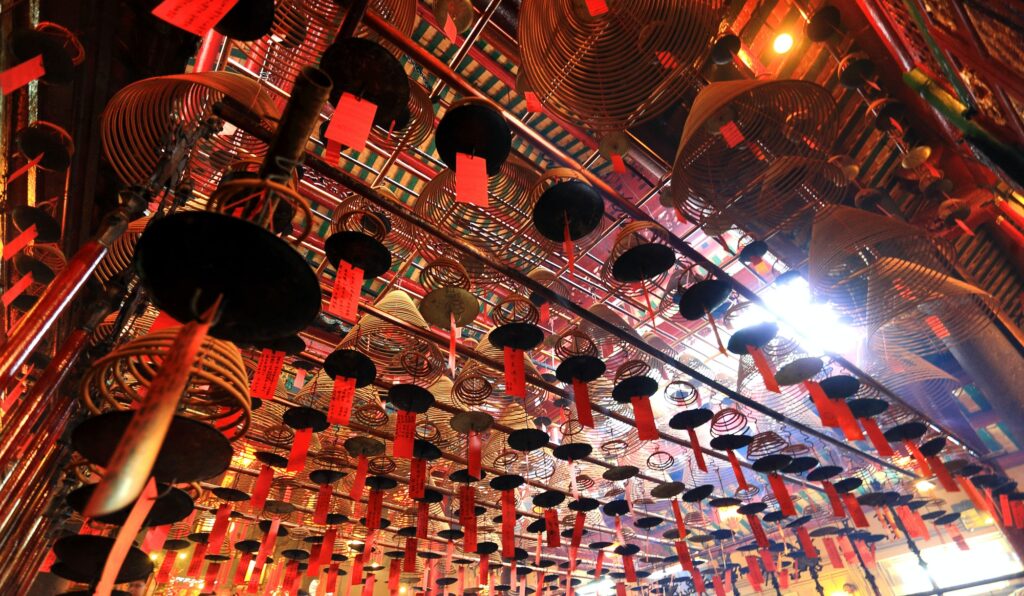
The interior of the temple is equally captivating, with a series of ornate halls and chambers dedicated to different deities and purposes. Intricately carved wooden panels, lacquered beams, and hanging incense coils contribute to the temple’s atmospheric charm.

The Hall of Man Cheong and Mo Tai

The central hall of the Man Mo Temple is dedicated to its namesake deities, Man Cheong and Mo Tai. The statues of these revered gods are surrounded by the lingering scent of burning incense, creating an immersive and contemplative atmosphere. Devotees and visitors alike come to offer prayers and seek blessings, fostering a sense of reverence within the sacred space.

The Hall of Man Cheong and Mo Tai is adorned with traditional furnishings, including large hanging incense spirals that release fragrant smoke. The rhythmic swaying of the incense coils, coupled with the ambient lighting and subtle echoes of prayers, adds to the sensory experience of the temple.

Altars and Offerings

Throughout the Man Mo Temple, visitors encounter various altars dedicated to different deities, each adorned with offerings of fruits, flowers, and burning incense. Devotees present their prayers and wishes through offerings, expressing gratitude and seeking divine guidance. The visual spectacle of the altars, coupled with the sounds of ritualistic chants, creates a serene ambiance that transports visitors to a realm of spiritual contemplation.

Fortune Sticks and Divination

A distinctive feature of the Man Mo Temple is the practice of Kau Cim, a form of Chinese fortune telling. Devotees seeking guidance on matters such as health, career, or relationships shake a cylindrical container containing numbered sticks until one stick emerges. Each stick corresponds to a specific fortune, and temple staff interpret the fortune for the individual.

The tradition of Kau Cim adds an interactive and participatory element to the temple visit, allowing individuals to engage with the spiritual practices deeply rooted in Chinese culture.

Cultural Significance

Beyond its religious and spiritual significance, the Man Mo Temple holds cultural importance as a symbol of Hong Kong’s historical and architectural legacy. The temple is a designated monument, recognized for its contribution to the city’s cultural heritage. Its preservation and continued use for religious practices contribute to the vibrant tapestry of traditions that define Hong Kong.

Festivals and Celebrations

The Man Mo Temple comes alive during traditional Chinese festivals and celebrations. Events such as Chinese New Year and the Mid-Autumn Festival attract crowds to the temple, where elaborate rituals, performances, and decorations create a festive atmosphere. These celebrations offer visitors a unique opportunity to witness the dynamic cultural expressions embedded in the temple’s rituals.

Adjacent Garden and Environs

The temple’s surroundings add to its allure, with a peaceful garden providing a tranquil escape from the urban bustle. The adjacent Hollywood Road Park offers a scenic setting for contemplation, with lush greenery and traditional Chinese architecture. The harmonious integration of the temple, garden, and park creates an oasis of tranquility amidst the dynamic urban landscape.

Accessibility and Getting There

The Man Mo Temple is conveniently located in Sheung Wan, accessible by various modes of transportation. Visitors can take the MTR (Mass Transit Railway) to Sheung Wan Station and embark on a short walk to reach the temple. The central location makes it easily accessible for those exploring Hong Kong Island.

A Spiritual Retreat in the Heart of the City

In conclusion, the Man Mo Temple stands as a spiritual retreat in the heart of Hong Kong, inviting visitors to explore the depths of its cultural and religious significance. As an enduring symbol of tradition and tranquility, the temple continues to serve as a place of worship, reflection, and community.

Whether one seeks to offer prayers, experience traditional rituals, or simply bask in the architectural beauty of a bygone era, the

Man Mo Temple beckons with open doors and an invitation to step into a world where time seems to stand still amid the fragrance of incense and the whispers of ancient prayers.

Photos

Videos

Today Open now UTC+5.5

08:00 AM - 06:00 PM
  • Monday
    08:00 AM - 06:00 PM
  • Tuesday
    08:00 AM - 06:00 PM
  • Wednesday
    08:00 AM - 06:00 PM
  • Thursday
    08:00 AM - 06:00 PM
  • Friday
    08:00 AM - 06:00 PM
  • Saturday
    08:00 AM - 06:00 PM
  • Sunday
    08:00 AM - 06:00 PM

Categories

Statistic

127 Views
0 Rating
0 Favorite
0 Share

Claim Listing

Is this your business?

Claim listing is the best way to manage and protect your business.