
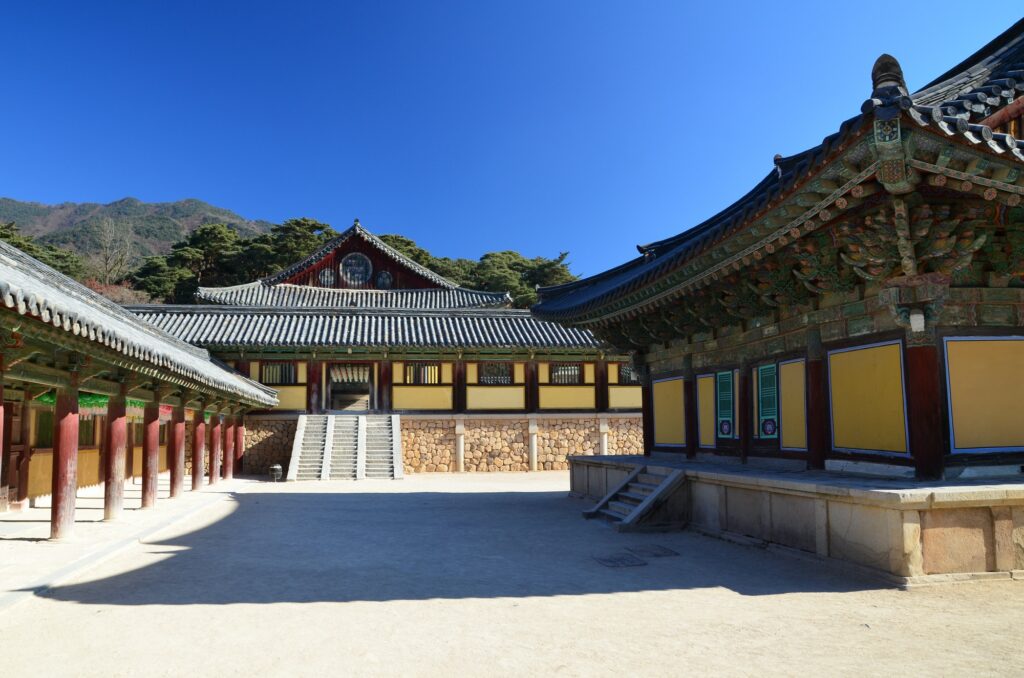

Nestled on the slopes of Mount Toham in Gyeongju, South Korea, Bulguksa Temple stands as a cultural masterpiece and a spiritual sanctuary that transcends time. Designated as a UNESCO World Heritage Site, this ancient temple complex is a testament to the rich tapestry of Korean Buddhism and architectural prowess. In this detailed exploration, we embark on a journey through the history, significance, and architectural splendor of Bulguksa Temple.
Historical Tapestry
Bulguksa’s roots trace back to the Silla Dynasty in the 8th century when the temple was commissioned by Kim Daeseong and his son Kim Sikyeom in honor of their parents. Originally named Beopryusa, it underwent multiple reconstructions over the centuries due to various fires and invasions. The current iteration, as we know it today, is largely credited to the restoration efforts during the Goryeo Dynasty.
The temple served as a center for Buddhist practice and learning, housing precious scriptures, relics, and attracting scholars and monks from across Asia. Despite the challenges it faced, including destruction during the Japanese invasions in the late 16th century, Bulguksa endured and underwent subsequent renovations, solidifying its status as a revered cultural and spiritual landmark.
Architectural Splendor
Bulguksa’s architectural brilliance is best exemplified by its meticulous layout and the intricate design of its structures. The temple complex is divided into two main areas: the Bumun-ri (upper) and the Samun-ri (lower). The entrance, accessed through the Jahamun Gate, leads visitors through a series of staircases and pathways, heightening the sense of anticipation before the main complex unfolds.
At the heart of Bulguksa stands the Daeungjeon Hall, also known as the Hall of Great Enlightenment. This iconic structure, with its distinctive multilayered eaves and intricate woodwork, houses the main altar featuring statues of Buddha and his disciples. The interior is adorned with vibrant murals and delicate lotus flower patterns, creating an atmosphere of serenity and reverence.
Adjacent to the Daeungjeon Hall is the Geungnakjeon Hall, dedicated to Amitabha Buddha and the Pure Land. The hall’s unique architectural elements, including the ornate banisters and bracketing, showcase the skill and craftsmanship of the artisans of the time.
The two iconic stone pagodas, Dabotap and Seokgatap, further elevate Bulguksa’s aesthetic appeal. Dabotap, also known as the Many Treasure Pagoda, stands tall with intricate carvings that depict scenes from Buddhist teachings. Seokgatap, the Sakyamuni Pagoda, is equally captivating, with its elegant simplicity and symbolic significance.
Symbolism and Sacred Relics
Beyond its architectural grandeur, Bulguksa is a repository of sacred relics and symbolic representations. The temple is home to seven national treasures, including the Dabotap Pagoda, Seokgatap Pagoda, and the Golden Seated Vairocana Statue, among others. These treasures not only embody the artistic achievements of their respective eras but also hold immense religious and cultural significance.
The Dabotap Pagoda, standing at 10 meters tall, symbolizes the aspiration for enlightenment. Its intricate carvings depict various Buddhist deities and celestial beings, creating a visual narrative that transcends language and time.
The Seokgatap Pagoda, on the other hand, symbolizes the historical Buddha Sakyamuni’s enlightenment. Its three tiers represent the ten realms of existence in Buddhist cosmology, encapsulating the profound teachings of interconnectedness and enlightenment.
Rituals and Festivals
Bulguksa remains an active center for Buddhist rituals and ceremonies. Throughout the year, the temple hosts various events and festivals, inviting both practitioners and visitors to partake in the rich tapestry of Korean Buddhist traditions.
One of the most significant ceremonies is the Yeondeunghoe Lantern Festival, celebrated to honor Buddha’s birthday. Thousands of lanterns illuminate the temple grounds, creating a magical spectacle that symbolizes the dispelling of darkness and the advent of enlightenment.
Practical Tips for Visitors
Timing: Plan your visit during the spring or fall for pleasant weather and the added beauty of cherry blossoms or autumn foliage.
Footwear: Wear comfortable shoes suitable for exploring the temple complex, as there are stairs and pathways.
Respectful Attire: As a place of worship, it’s advisable to dress modestly, covering shoulders and knees.
Guided Tours: Consider joining a guided tour to gain deeper insights into the historical and cultural significance of Bulguksa.
Additional Attractions: Explore the nearby Seokguram Grotto, another UNESCO World Heritage Site housing a remarkable Buddha statue, for a more comprehensive experience.
In Conclusion
Bulguksa Temple stands as a living testament to the enduring spirit of Korean Buddhism and the artistic brilliance of its craftsmen. Its timeless beauty, coupled with the profound symbolism embedded in its architecture and artifacts, invites visitors to embark on a journey of cultural and spiritual discovery. As the gentle whispers of prayer and the rustling of leaves in the surrounding forest create a tranquil symphony, Bulguksa remains a beacon of serenity and enlightenment on the slopes of Mount Toham.