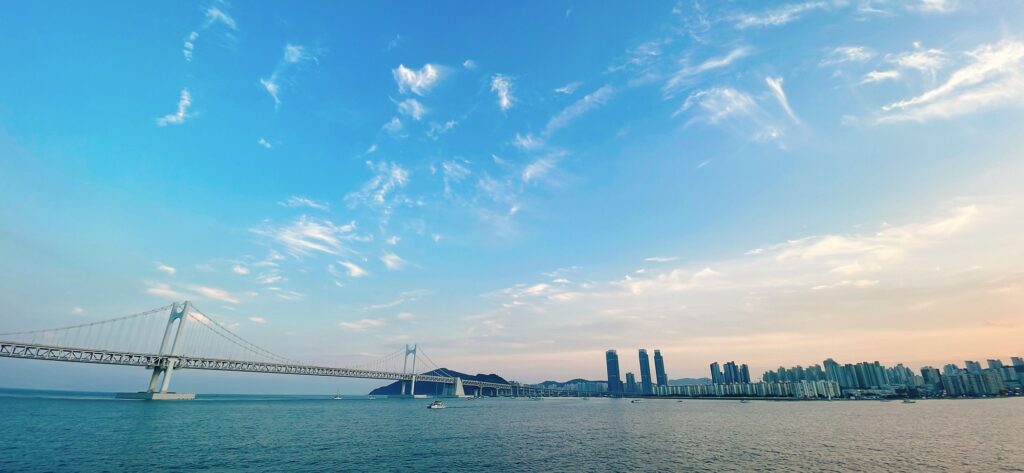
Gwangan Bridge, a captivating architectural marvel spanning the sparkling waters of Busan, South Korea, stands as a testament to engineering prowess and urban beauty. Stretching majestically across the Gwangan Bay, this iconic bridge has become a symbol of Busan’s modernity and progress.
A Symphony of Lights: Gwangan Bridge transforms into a breathtaking spectacle as night falls. Thousands of LED lights adorning the bridge illuminate the night sky, creating a dazzling display that captivates both locals and visitors. The bridge seems to come alive, harmonizing with the city’s vibrant nightlife and the gentle waves below.
Connecting Communities: Opened in 2003, Gwangan Bridge serves as a vital transportation link, connecting the neighborhoods of Haeundae and Suyeong. Its presence has not only eased commuting but has also facilitated economic growth and cultural exchange between these regions. The bridge has become an integral part of daily life for Busan’s residents.
Cultural Hub at Gwangalli Beach: Gwangan Bridge is not just a passageway; it’s a cultural hub. Gwangalli Beach, situated beneath the bridge, attracts locals and tourists alike. The beach offers a perfect vantage point to admire the bridge’s grandeur. Visitors can relax on the sandy shores, enjoying the view during the day or joining lively beachside festivities in the evening.
The Diamond Bridge: Gwangan Bridge is often affectionately referred to as the “Diamond Bridge” due to the sparkling lights resembling glistening diamonds against the night sky. The nickname aptly captures the bridge’s radiant charm and its role as a precious gem in Busan’s cityscape.
Bridge of Festivals: Throughout the year, Gwangan Bridge becomes a focal point for various festivals and events. From firework displays that light up the sky during celebrations to cultural festivals that bring communities together, the bridge serves as a dynamic backdrop for Busan’s vibrant cultural calendar.
Architectural Marvel: The bridge’s unique double-decker design adds to its architectural allure. The upper deck accommodates vehicular traffic, ensuring smooth transportation flow, while the lower deck features pedestrian-friendly spaces. This thoughtful design enhances the bridge’s functionality and accessibility.
Gwangan Bridge by Day: During the day, Gwangan Bridge offers panoramic views of the coastline and surrounding landscapes. The azure waters beneath the bridge provide a serene contrast to the bustling city life. Visitors can stroll along the nearby promenade, capturing picturesque scenes of this architectural masterpiece against the backdrop of the sea.
In conclusion
Gwangan Bridge is not just a means of crossing waters; it’s a cultural landmark, a symbol of connectivity, and a canvas for artistic light displays. As it stands tall against the changing tides, Gwangan Bridge continues to be a source of pride for Busan and a must-visit destination for those seeking beauty in both infrastructure and nature.