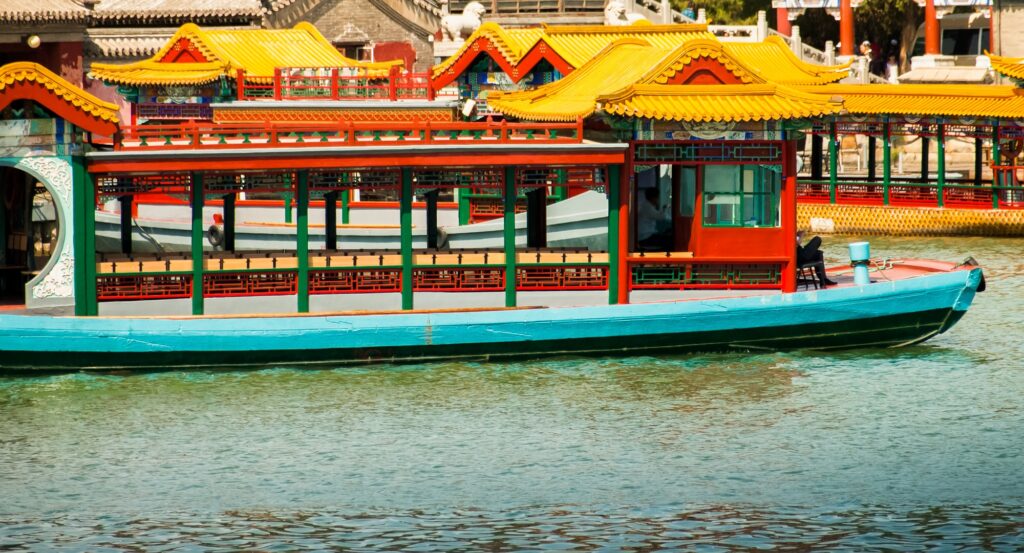
Nestled in the western suburbs of Beijing, the Summer Palace stands as a testament to China’s imperial history, blending architectural elegance with the beauty of nature. This iconic palace complex, encompassing Kunming Lake and Longevity Hill, served as a retreat for emperors seeking respite from the summer heat. Join us on a virtual journey through the rich history, breathtaking scenery, and cultural significance of the Summer Palace.
Historical Origins: The Summer Palace’s history dates back to the Jin Dynasty (1115–1234), but its most significant developments occurred during the Qing Dynasty (1644–1912). Emperor Qianlong commissioned the construction of the Summer Palace in 1750, and subsequent emperors expanded and enhanced its features. The palace complex underwent restoration and expansion under Empress Dowager Cixi in the late 19th century.
Architectural Marvels: The Summer Palace boasts a harmonious blend of classical Chinese architecture and natural landscapes. The architectural ensemble includes palaces, pavilions, halls, and bridges, all strategically placed to maximize the scenic views of Kunming Lake and the surrounding hills. Notable structures such as the Hall of Benevolence and Longevity and the Tower of Buddhist Incense showcase exquisite craftsmanship and imperial aesthetics.
Kunming Lake: At the heart of the Summer Palace lies Kunming Lake, a vast artificial lake covering approximately three-quarters of the total area. The lake, adorned with bridges, islands, and temples, reflects the traditional Chinese landscape design philosophy. Visitors can enjoy boat rides on the lake, immersing themselves in the serene ambiance while appreciating the architectural beauty that surrounds it.
Longevity Hill: Rising on the northern shore of Kunming Lake, Longevity Hill is a prominent feature of the Summer Palace landscape. The hill is adorned with temples, pagodas, and gardens. The Tower of Buddhist Incense, perched atop Longevity Hill, offers panoramic views of the palace complex and the distant cityscape.
The Marble Boat: A notable highlight within Kunming Lake is the Marble Boat, an ornate pavilion built on a stone base resembling a boat. Originally constructed in the 18th century, the Marble Boat underwent reconstruction during the late Qing Dynasty. It serves as a symbolic representation of stability and permanence amid the ever-changing waters of life.
The Seventeen-Arch Bridge: Spanning across Kunming Lake, the Seventeen-Arch Bridge is a masterpiece of traditional Chinese bridge design. Each arch represents one of the seventeen provinces of imperial China. The bridge not only provides a functional crossing but also enhances the aesthetic appeal of the landscape.
Cultural Significance: The Summer Palace is deeply rooted in Chinese cultural history. It served as a retreat for emperors and their families, offering a space for leisure, artistic pursuits, and cultural activities. The palace complex also played a role in political affairs, hosting significant events and imperial ceremonies.
Imperial Gardens: Lush imperial gardens surround the palace buildings, featuring a variety of flora, rockeries, and pavilions. The intricately designed gardens provide a tranquil environment for contemplation and relaxation, inviting visitors to meander through pathways adorned with ancient trees and vibrant flowers.
UNESCO World Heritage Site: The Summer Palace was designated as a UNESCO World Heritage Site in 1998, recognizing its cultural and historical significance. The site represents a masterpiece of Chinese landscape garden design, embodying the principles of balance, harmony, and integration with the natural environment.
Visitor Experience: Today, the Summer Palace welcomes millions of visitors annually, offering a glimpse into China’s imperial past and the aesthetic principles that guided its architectural and landscape design. The palace complex provides a serene escape from the urban bustle, allowing visitors to explore the history, art, and natural beauty that define this cultural treasure.
Conclusion: The Summer Palace stands as a living testament to China’s imperial legacy, where architectural brilliance harmonizes with the splendor of nature. As visitors stroll through the palace grounds, they embark on a journey through time, experiencing the opulence and cultural richness of China’s imperial history. The Summer Palace remains a symbol of timeless beauty, inviting all who visit to witness the seamless integration of human creativity with the natural world.