
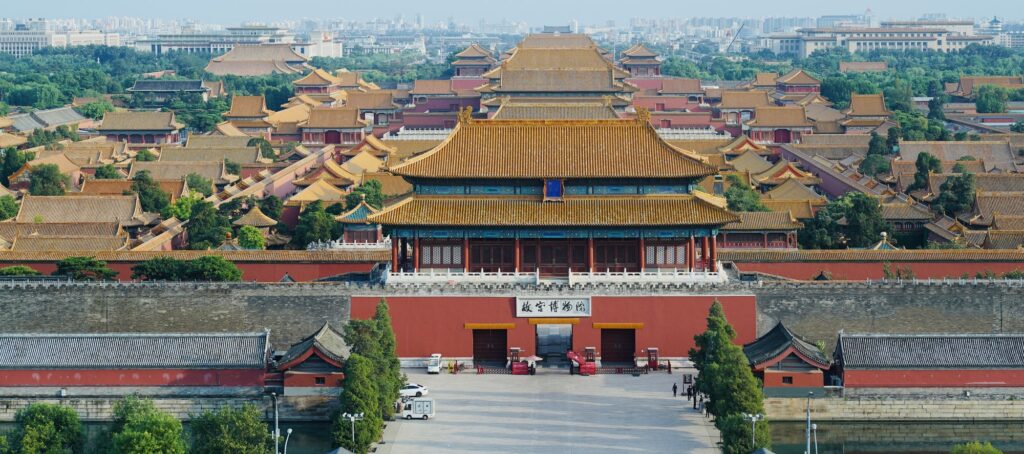

The Palace Museum (Forbidden City)

The Palace Museum (Forbidden City)

Average Reviews

Description

Exploring the Forbidden City’s Timeless Grandeur

Nestled at the heart of Beijing, the Palace Museum, also known as the Forbidden City, stands as an architectural masterpiece and a living testament to China’s imperial history. With its grand courtyards, intricate halls, and a vast collection of artifacts, the Forbidden City has captured the imagination of visitors for centuries. Join us on a virtual tour through the hallowed halls of the Palace Museum, unraveling the stories behind its construction, its imperial residents, and the cultural treasures it safeguards.

Imperial Grandeur:
Constructed between 1406 and 1420 during the Ming Dynasty, the Forbidden City served as the imperial palace for 24 emperors, spanning the Ming and Qing dynasties. Its name, the Forbidden City, reflects the exclusivity of its access, as entry was restricted to the emperor, his close aides, and select imperial staff.

Architectural Marvel:
The Forbidden City is an architectural marvel, covering an area of 180 acres with nearly 1,000 surviving buildings. Its design, influenced by principles of Chinese cosmology, incorporates elements of feng shui and symbolism. The palace complex is surrounded by high walls and a large moat, creating an imposing and majestic presence.

Layout and Symbolism:
The Forbidden City is organized along a central north-south axis, with a series of courtyards and halls aligned on this axis. The buildings are meticulously arranged to convey symbolic meanings, emphasizing the emperor’s authority and connection to the heavens. The Hall of Supreme Harmony, the Hall of Central Harmony, and the Hall of Preserving Harmony are key structures embodying the imperial power and rituals.

Palatial Halls and Courtyards:
As visitors traverse the Forbidden City, they encounter a series of palatial halls, each serving specific functions in the imperial court. The Hall of Heavenly Purity housed the emperor’s bedchamber, while the Palace of Heavenly Purity served as the residence of empresses. The Inner and Outer Courts, with their ornate architecture and sprawling courtyards, showcase the opulence and grandeur of imperial life.

Cultural Treasures:
The Palace Museum is home to an extensive collection of cultural artifacts, including paintings, ceramics, calligraphy, and imperial treasures. The museum’s collection spans over a million items, offering a comprehensive view of China’s artistic and historical heritage. Notable exhibits include the imperial throne, intricate silk robes, and the famous Nine Dragons Screen.

The Imperial Garden:
At the rear of the Forbidden City lies the Imperial Garden, a meticulously landscaped retreat for the emperor. The garden features pavilions, pathways, and ancient trees, providing a serene escape from the bustling palace life. Intricate rockeries and symbolic plantings add to the beauty and cultural significance of this imperial retreat.

Restoration and Preservation:
The Forbidden City has undergone extensive restoration efforts to preserve its architectural integrity and cultural artifacts. Ongoing projects aim to protect the wooden structures, murals, and artifacts from the ravages of time and environmental factors, ensuring that future generations can continue to appreciate this cultural treasure.

Visitor Experience:
Today, the Palace Museum welcomes millions of visitors annually, offering a glimpse into China’s imperial past. As visitors walk the same stone pathways as emperors once did, they are transported back in time, surrounded by the echoes of ancient rituals and imperial ceremonies.

Conclusion:
The Palace Museum, with its timeless architecture and cultural richness, stands as a living testament to China’s imperial legacy. As a UNESCO World Heritage Site, it invites visitors to immerse themselves in the grandeur of the Forbidden City, unraveling the stories of emperors and empresses who once called it home. The Palace Museum remains a symbol of China’s rich history, a treasure trove of cultural artifacts, and a testament to the enduring legacy of one of the world’s most magnificent imperial palaces.

Photos

Videos

Today Open now UTC+5.5

08:30 AM - 04:30 PM
  • Monday
    Day Off
  • Tuesday
    08:30 AM - 04:30 PM
  • Wednesday
    08:30 AM - 04:30 PM
  • Thursday
    08:30 AM - 04:30 PM
  • Friday
    08:30 AM - 04:30 PM
  • Saturday
    08:30 AM - 04:30 PM
  • Sunday
    08:30 AM - 04:30 PM

Statistic

132 Views
0 Rating
0 Favorite
0 Share

Claim Listing

Is this your business?

Claim listing is the best way to manage and protect your business.