
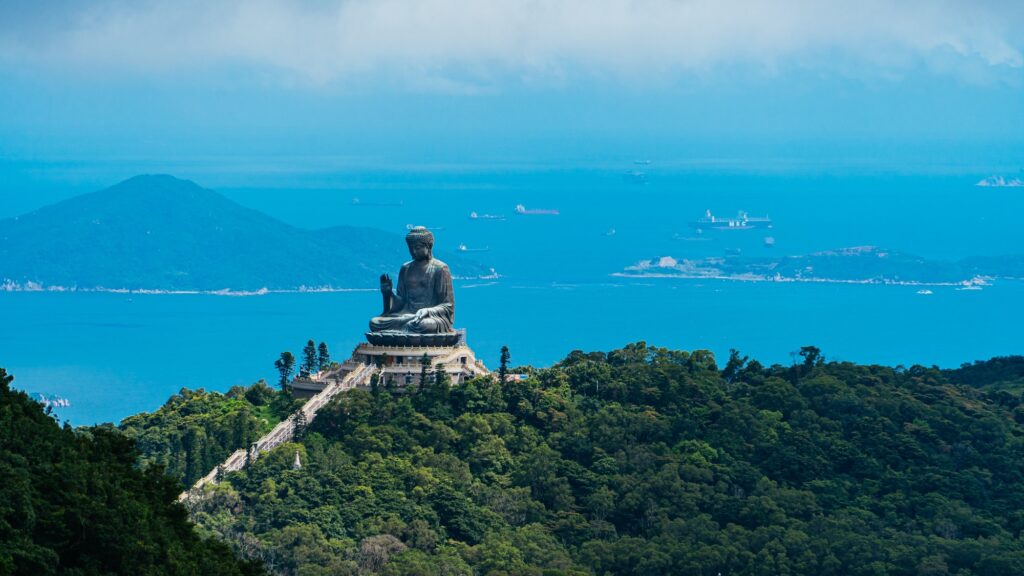

Perched atop Ngong Ping Plateau on Lantau Island in Hong Kong, the Tian Tan Buddha, also known as the Big Buddha, stands as a majestic symbol of serenity, spirituality, and cultural richness. Surrounded by lush landscapes and overlooking the panoramic vistas of the South China Sea, the Tian Tan Buddha is not merely a colossal bronze statue; it is a spiritual beacon that draws pilgrims, tourists, and seekers alike. As one of the world’s largest seated Buddha statues, this awe-inspiring monument invites visitors to embark on a journey of cultural discovery, contemplation, and a connection to the profound spiritual heritage of the East.
The Origins and Significance
The Tian Tan Buddha was consecrated on December 29, 1993, after almost a decade of meticulous planning and construction. The statue was commissioned as part of the Ngong Ping 360 project, a major initiative to enhance tourism, accessibility, and cultural experiences on Lantau Island.
This remarkable statue holds deep significance within Buddhism, representing the harmonious blend of art, architecture, and religious symbolism. Seated atop a lotus throne, the Buddha faces north, gazing over the expanses of Hong Kong. The lotus, a symbol of purity and enlightenment, is a recurring motif in Buddhist iconography.
The Journey to Enlightenment
Reaching the Tian Tan Buddha is a symbolic journey in itself, echoing the path of enlightenment in Buddhist teachings. Visitors can ascend to the site via a scenic cable car ride on the Ngong Ping 360, offering breathtaking views of the island’s landscapes and the shimmering waters of the South China Sea.
Alternatively, a traditional pilgrimage route involves climbing the 268 steps leading to the statue, a spiritual exercise that mirrors the steps to enlightenment in Buddhist philosophy. The journey becomes a metaphorical ascent towards inner peace and understanding, creating a sense of reverence and contemplation.
The Imposing Presence
As visitors approach the Tian Tan Buddha, they are greeted by its imposing presence. Standing at a height of 34 meters (112 feet), the statue is made of bronze and weighs a staggering 250 metric tons. The intricate details of the Buddha’s robes, serene expression, and the mudra (hand gesture) symbolizing fearlessness and reassurance add to the awe-inspiring nature of the monument.
The Tian Tan Buddha’s right hand is raised, representing the removal of affliction, while the left hand rests on the Buddha’s lap, signifying meditation and the attainment of enlightenment. The sheer scale and craftsmanship of the statue make it a testament to the devotion, artistry, and spiritual aspirations of those who contributed to its creation.
The Wisdom Path
Adjacent to the Tian Tan Buddha is the Wisdom Path, a spiritual trail lined with 38 wooden steles that showcase the verses from the Heart Sutra, a revered Buddhist scripture. The Heart Sutra encapsulates the essence of Mahayana Buddhism, emphasizing the concept of emptiness and the interconnected nature of all things.
As visitors stroll along the Wisdom Path, surrounded by the tranquil sounds of nature, they can reflect on the profound teachings inscribed on the steles. The setting encourages contemplation, inviting individuals to connect with the wisdom embedded in these sacred verses.
The Po Lin Monastery
The Tian Tan Buddha is not an isolated monument; it is intricately connected to the Po Lin Monastery, a significant Buddhist institution on Lantau Island. The monastery, whose name translates to “Precious Lotus,” predates the construction of the statue and has served as a center for Buddhist worship, meditation, and learning for over a century.
Visitors to the Po Lin Monastery can explore its ornate halls, pavilions, and prayer rooms adorned with intricate carvings, paintings, and sacred relics. The serene atmosphere and the rhythmic chants of monks create a spiritual ambiance that resonates with the teachings of Buddhism.
Vegetarian Delights
The Po Lin Monastery is renowned for its vegetarian cuisine, offering a delectable array of dishes prepared with mindfulness and respect for Buddhist dietary principles. Visitors can indulge in a vegetarian feast that not only tantalizes the taste buds but also aligns with the monastery’s commitment to compassion and non-violence.
The dining experience becomes a holistic journey, connecting the act of nourishing the body with the principles of mindfulness and ethical consumption. The vegetarian offerings provide a taste of the monastery’s commitment to fostering harmony with all living beings.
Festivals and Celebrations
Throughout the year, the Tian Tan Buddha and the Po Lin Monastery come alive with vibrant celebrations and festivals. The most prominent of these is the Buddha’s Birthday, a grand event that draws pilgrims and visitors from around the world. Elaborate ceremonies, processions, and the lighting of thousands of lanterns contribute to the festive atmosphere, creating an opportunity for cultural exchange and spiritual rejuvenation.
The Tian Tan Buddha at Sunset
As the day draws to a close, the Tian Tan Buddha takes on a different aura. The warm hues of the setting sun cast a golden glow on the statue, creating a serene and ethereal atmosphere. Visitors who choose to linger until sunset are rewarded with a transformative experience as the last rays of sunlight bathe the statue in a tranquil radiance.
Sustainability and Preservation
In addition to its spiritual and cultural significance, the Tian Tan Buddha is committed to sustainable practices. The Ngong Ping 360 project incorporates eco-friendly measures, and efforts are made to minimize the environmental impact of increased tourism to the site.
The preservation of the statue and its surroundings is a collaborative effort involving local authorities, cultural organizations, and environmental advocates. This commitment to sustainability ensures that future generations can continue to appreciate the spiritual and natural beauty of this iconic site.
In Conclusion
The Tian Tan Buddha, with its profound symbolism, spiritual ambiance, and breathtaking setting, transcends its role as a monumental statue. It becomes a pilgrimage site for those seeking inner peace, a cultural landmark that bridges the past and present, and a testament to the enduring values of Buddhism. As visitors ascend the steps or ride the cable car to reach this serene sanctuary, they embark on a journey of self-discovery, cultural exploration, and spiritual connection that resonates with the timeless teachings of the Buddha.