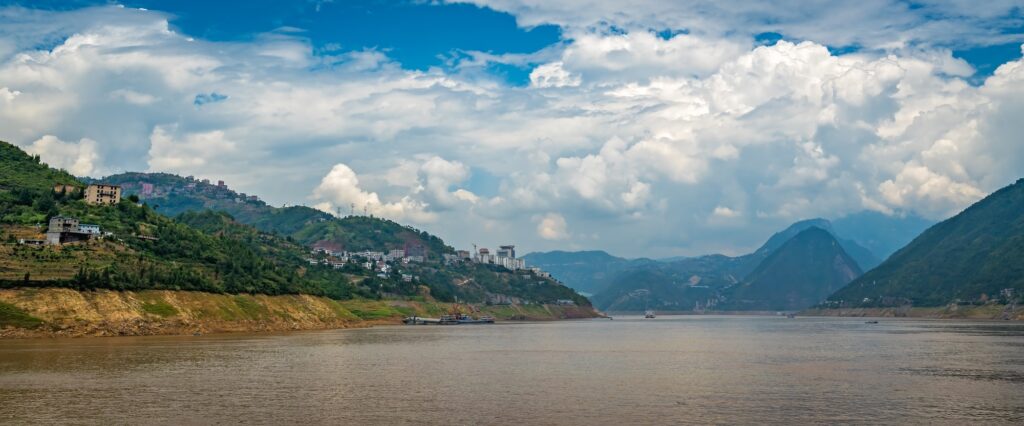
Flowing through the heart of China like a sinuous dragon, the Yangtze River is one of the world’s most iconic waterways. Stretching over 6,300 kilometers (3,915 miles), it winds its way through diverse landscapes, historic cities, and cultural treasures, leaving an indelible mark on the tapestry of China’s rich history. Join us on a virtual voyage as we explore the grandeur of the Yangtze River, from its source on the Tibetan Plateau to its vast delta near Shanghai.
Origin and Source: The Yangtze River begins its journey high on the Tibetan Plateau, in the Tanggula Mountains. Fed by the melting glaciers and numerous tributaries, it gains momentum as it meanders through the Qinghai-Tibet Plateau, carving deep valleys and gorges along its path. The Yangtze is often referred to as the “Chang Jiang” in Chinese, translating to the “Long River.”
Three Gorges Region: One of the most famous sections of the Yangtze is the Three Gorges region, comprising the Qutang, Wu, and Xiling Gorges. Towering cliffs, emerald waters, and mist-shrouded landscapes create a breathtaking spectacle. The construction of the Three Gorges Dam, completed in 2006, brought about significant changes to the river’s ecosystem and facilitated navigation, flood control, and electricity generation.
Cultural and Historical Significance: The Yangtze River has been a cradle of Chinese civilization for millennia. Cities along its banks, such as Chongqing, Wuhan, and Nanjing, boast rich histories and cultural heritage. Ancient trade routes flourished along the river, connecting the heartland of China to distant regions. The riverbanks are dotted with historic sites, temples, and pagodas that bear witness to the ebb and flow of dynasties.
Yangtze River Cruise: Embarking on a Yangtze River cruise is a popular way to witness the scenic beauty and cultural richness along its course. Cruises often traverse the Three Gorges, offering passengers a front-row seat to the mesmerizing landscapes, ancient villages, and the impressive Three Gorges Dam. It’s a leisurely way to explore the river’s grandeur while enjoying modern amenities on board.
Wildlife and Biodiversity: The Yangtze River basin is home to a diverse array of flora and fauna. The river supports various species, including the iconic Yangtze River dolphin, also known as the Baiji, though sadly declared functionally extinct. Efforts are underway to conserve the remaining biodiversity and restore habitats in the face of environmental challenges.
Cities Along the Yangtze: Numerous cities thrive along the banks of the Yangtze, each with its own unique character. Chongqing, a bustling metropolis, serves as the gateway to the Three Gorges. Wuhan, known for its historic Yellow Crane Tower, is a key cultural center. Nanjing, with its ancient city walls and mausoleums, reflects the grandeur of past dynasties.
Economic Lifeline: Beyond its cultural and scenic significance, the Yangtze River is an economic lifeline for China. It facilitates the transportation of goods, supports agriculture in its fertile plains, and generates hydropower for the nation. The river’s role in trade and commerce continues to be vital for the development of the regions it traverses.
Challenges and Conservation: The Yangtze River faces environmental challenges, including pollution, habitat loss, and the impacts of dam construction. Conservation initiatives aim to address these issues and strike a balance between economic development and environmental protection. The ongoing efforts are crucial for sustaining the river’s vitality and safeguarding its ecological integrity.
Conclusion: The Yangtze River is a testament to the intertwined nature of culture, history, and ecology. Its meandering course through China’s landscapes tells the story of a nation’s evolution and the resilience of its people. Whether cruising through the Three Gorges, exploring ancient cities, or appreciating the biodiversity along its banks, a journey along the Yangtze is an immersion into the heart of China’s past, present, and future.